You'll receive a checklist with 16 profitable action steps to implement daily in your shop!
16 Daily Actions to Blow Your Listings Up
free checklist
view reviews
We love sharing our student wins weekly!
see student results

type below and hit enter
Search the blog
student reviews
how to grow on etsy
starting an etsy shop
Browse by topic
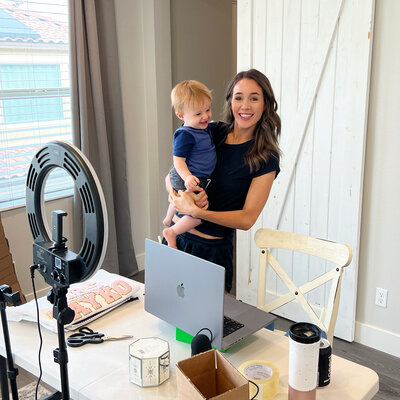
I am Dylan, a multi-six figure Etsy & Shopify seller. My Etsy shop ranks in the 0.1% of Etsy shops worldwide and we reached $1M+ in sales in just 5 years.
Read more about me
I'm so glad you're here

The Etsy Product Ideas That Sell Themselves
September 29, 2026
Why Most Etsy Product Ideas Fail Before They Even Launch
Stop guessing which products will sell on Etsy. Learn how I use a customer-first strategy to find profitable Etsy product ideas.
I want to talk about something that can determine a huge part of your Etsy success before you create your first listing, take your first product photo, or design your first mockup: who you are selling to and what you are selling them.
Most sellers, myself included in the early days, get this process backwards.
We think of something that looks cute. We notice a product doing well on Etsy. Maybe we see another seller getting thousands of sales and think, “I could make something like that.” Then we create the product, photograph it, write the listing, publish it, and wait.
And wait.
Then we create another product and do the exact same thing.
This approach to finding Etsy product ideas feels productive because you are constantly creating. However, creating more products does not automatically create more demand.
If you are choosing Etsy product ideas based primarily on what you personally like or what you hope someone will buy, you are essentially building a business around a guess.
That is the part I want you to rethink.
Instead of starting with the product, I want you to start with the customer.
When Thinking of Your Etsy Product Ideas: Customer First, Product Second
The biggest shift I made in my approach to Etsy product ideas was incredibly simple:
Customer first. Product second.
That means I do not begin by asking, “What should I make?”
I begin by asking, “Who do I want to sell to?”
Once I understand that customer, I can look at their lifestyle, spending habits, interests, problems, celebrations, priorities, and the other things they already spend money on.
From there, my Etsy product ideas become much easier to identify.
This is a fundamentally different approach from creating random products and hoping the right person eventually discovers them.
Think about it this way. If you know your ideal customer spends heavily on home decor, children’s products, personalized gifts, holidays, and entertaining, you suddenly have dozens of potential product categories to explore.
You are no longer trying to invent Etsy product ideas from scratch every morning.
Instead, you are looking for ways to serve an existing customer across different areas of their life.
That distinction can completely change how you build your shop.
How I Found My Most Profitable Customer Through These Etsy Product Ideas
When I started my own Etsy shop, I had a very specific type of customer in mind.
At the time, I was newly married and starting a family. I was also following a lot of mommy influencers who shared shopping hauls, nursery inspiration, holiday ideas, personalized products, and family activities.
I watched what they bought.
More importantly, I watched what their audiences bought.
These women were spending money on their homes, their children, celebrations, holidays, birthdays, weddings, Easter baskets, back-to-school events, and personalized items.
That gave me a much clearer direction for my Etsy product ideas.
I wasn’t simply thinking, “What can I make?”
I was thinking, “What would this particular customer want to buy?”
That became the foundation of my product mix.
Instead of building a shop around one isolated product category, I built around the customer. Nursery products could lead to birthday products. Birthday products could lead to holiday products. Holiday products could lead to hosting and entertaining products.
Suddenly, one customer could have many reasons to return.
That is the power of customer-first Etsy product ideas.
Stop Looking for One Product That Will Go Viral
One of the biggest mistakes I see sellers make is searching for a single magical product.
They want the product that will suddenly take off, generate hundreds of orders, and solve their Etsy income problem.
Unfortunately, that is not a reliable business strategy.
A better way to develop Etsy product ideas is to think about your customer as a real person with an entire life, rather than someone who only needs one thing.
Ask yourself:
What does my customer buy for herself?
Look beyond your immediate product category. What does she buy for her home, her hobbies, her work, her family, or her personal interests?
What does she buy for other people?
Gift-giving can create multiple opportunities throughout the year. Consider birthdays, weddings, baby showers, anniversaries, holidays, graduations, and other milestones.
What events matter to her?
The best Etsy product ideas can often come from moments that already cause people to spend money.
Think about holidays, celebrations, life transitions, family traditions, and seasonal events.
What will she need six months from now?
This is where customer lifetime value becomes particularly interesting.
If someone buys from you once and disappears forever, you constantly have to find another customer.
However, if you understand the other things that same person is likely to buy, you can create a shop that gives them reasons to return.
Build a Product Ecosystem Around One Customer
I don’t want you to interpret “customer first” as meaning you should only sell one product.
Actually, I want you to think much bigger.
When I brainstorm Etsy product ideas, I think about the customer’s entire journey.
For example, imagine your ideal customer is a woman who loves creating beautiful celebrations for her family.
She might need:
- Personalized birthday decorations
- Party invitations
- Gift tags
- Cake toppers
- Holiday decor
- Easter basket accessories
- Christmas ornaments
- Baby shower products
- Wedding or anniversary items
- Hosting accessories
Notice what happened.
We started with one customer and suddenly created an entire ecosystem of Etsy product ideas.
The goal is not to make everything for everyone.
Instead, you want to become particularly useful to a specific type of customer.
That makes your shop more cohesive, your marketing easier, and your future product research much more focused.
Your Existing Products May Not Be the Problem
If you have already created dozens of listings and very few are selling, please do not assume you have to throw everything away.
I’ve seen sellers become discouraged because they believe their existing Etsy product ideas were simply bad.
Sometimes the product itself isn’t the biggest problem.
The issue may be positioning.
Your product could be valuable to a customer, but your listing might not be communicating that value to the right person.
That means there may be an opportunity to reposition what you already have.
How to Reposition Existing Etsy Product Ideas
There are several pieces that influence how your product is positioned in the marketplace.
Pricing
Price communicates something about the product and the customer you are trying to reach.
That does not mean you should automatically charge more. Instead, understand what your target customer expects to spend and what they perceive as valuable.
SEO
Your keywords need to connect your product with the searches your target customer is actually making.
Therefore, SEO should not be treated as simply adding as many keywords as possible. Your goal is to make it easier for the right customer to discover the right product.
Photography
Your photos should help the customer immediately understand what the product is, who it is for, and how it fits into their life.
A product can be perfectly good, but weak photography can make it difficult for shoppers to understand its value.
Aesthetic
Your visual style also helps communicate who your shop is for.
If you know your customer, you can make intentional choices about colors, fonts, mockups, photography, and overall presentation.
Together, these elements can transform existing Etsy product ideas into products that are positioned for a much more specific audience.
When Coming Up with Etsy Product Ideas: Think About Customer Lifetime Value
This is one of the concepts I want more Etsy sellers to understand.
Customer lifetime value, often called LTV, refers to the total value a customer can generate over the relationship with your business.
For me, this is a much more useful way to think about Etsy product ideas than simply asking whether one listing can generate a sale.
Imagine you spend time and money acquiring a customer who purchases a $15 product once.
Now imagine another customer who discovers your shop, loves what you offer, and comes back five or six times over several years.
Which customer relationship creates more long-term value?
That is why I want you to think beyond the first transaction.
When I evaluate Etsy product ideas, I want to know whether they can lead naturally into other purchases.
Can this customer buy again?
Can I serve another need?
Is there a seasonal reason for them to return?
Can one product introduce them to another part of my shop?
These questions help you build something more sustainable than a collection of disconnected listings.
How to Find Better Etsy Product Ideas
If you are starting from scratch, here is the process I recommend.
First, define the person you want to serve.
Next, study what that person already buys, follows, searches for, celebrates, and spends money on.
Then, identify the major areas of their life where your shop could provide value.
After that, brainstorm products around those areas instead of randomly generating Etsy product ideas.
Once you have a list, look for opportunities where the customer has an obvious reason to purchase more than once.
Finally, evaluate whether the product fits your capabilities, pricing model, margins, and overall brand.
This process may feel slower than simply uploading products every day.
In reality, it can save you an enormous amount of time because you are creating with a purpose.
The Goal Is Not More Products. It Is Better Customers.
More listings can certainly give your shop more opportunities to be discovered.
However, I don’t want you to confuse activity with progress.
If you are creating 50 products without knowing who they are for, you could simply end up with 50 products that do not have a strong customer behind them.
On the other hand, a focused shop built around a specific customer can give every new product a reason to exist.
That is ultimately how I want you to approach Etsy product ideas.
Don’t ask, “What else can I make?”
Ask, “What else does my customer need?”
That one question can lead you toward much stronger product decisions.
Your Etsy Shop Should Be Built Around a Person
The most important lesson I want you to take away is simple: customer first, product second.
Your next successful product does not necessarily need to be a completely revolutionary invention.
It may simply be a product that solves a problem, celebrates a moment, or fulfills a desire for a customer you already understand extremely well.
When you approach Etsy product ideas this way, you stop relying entirely on luck.
You start building a product mix around a real person.
You create opportunities for repeat purchases.
You make your SEO, photography, branding, and messaging more intentional.
Most importantly, you begin thinking like a business owner rather than someone hoping the next listing will finally sell.
If you already have a shop full of products that are not performing, don’t panic. Your existing Etsy product ideas may still have potential. Start by identifying who would actually value them, then look at how you can reposition your listings to reach that customer.
Because the goal isn’t simply to create products that people might buy.
The goal is to build a shop where the right people consistently find products they genuinely want.
And that is where truly powerful Etsy product ideas begin.
Ready to Grow Your Etsy Shop in 2026?
I’ve helped thousands of students generate over $10 million in Etsy revenue, and I want to help you, too.
Download my 16-Step Etsy Checklist with profit-focused action steps you can use daily to drive more traffic, sales and momentum fast!”
Start with my Etsy Kickstart Course – the exact system you can use to scale your shop to six figures.
Or explore EtSEO, my Etsy SEO software built to help your listings rank higher, faster.
2025 can be the year your shop finally breaks through. These strategies are just the beginning—are you ready to use them? Contact us now and let’s get started!

I am Dylan, a multi-six figure Etsy & Shopify seller. My Etsy shop ranks in the 0.1% of Etsy shops worldwide and we reached $1M+ in sales in just 5 years.
Read more about me
I'm so glad you're here
Hello!
Book a FREE 1:1 Call
SUBSCRIBE ON YOUTUBE
PROGRAM FAQs
I am here to provide value to YOU through tips and tactical advice to start your Etsy shop or to grow your current Etsy shop. No fluff. Only direct advice.
Let's Connect!
FOLLOW ME ON
© 2025 Dylan Jahraus. all rights reserved.
DISCLAIMER: The content shared here is for educational purposes only. While the success stories and testimonials we share are based on real experiences, they are not guarantees of similar results for everyone. Success requires hard work, commitment, and consistency, and business outcomes can vary depending on factors like your background, effort, and market conditions. This is not a get-rich-quick program—there’s no such thing. We believe in the power of dedication, integrity, and skill development as the true path to financial growth. We cannot promise specific results or income from our courses, events, or free resources. The average person who purchases educational content may not see the same success. The examples we share are meant to inspire, not to suggest that everyone will achieve the same outcomes. All business ventures involve risk and demand significant effort. If you're not ready to embrace this, we encourage you to reconsider moving forward.
CLIENT TESTIMONIALS: As with any business-related program, your results may vary from these consumer testimonials. Your results will be based on many variables, such as your level of effort, business acumen, personal qualities, knowledge, skills, and a host of other factors. Since these factors differ for each individual, we cannot guarantee your success, results, or income level, nor are we responsible for your success or failure. It takes lots of time, effort, and dedication. We believe that we provide you a great toolbox to achieve your desired results, and these testimonials agree.
privacy policy
TERMS
disclaimer
refunds
results guarantee
Cookie Policy
Book a Call
Schedule a FREE call to learn more about how we can help you 1:1 in your Etsy shop!